
Veneer cases succeed or struggle long before the final restorations are made. The planning steps, from the first conversation with the patient to the approved provisionals, decide most of the outcome. When the lab is part of that planning, the final veneers are far more likely to match what the patient expected.
Start with the patient's goals
Every veneer case begins with a simple question: what does the patient want to change? Some want whiter teeth. Some want to close spaces, lengthen worn edges or correct shape. Others want a result that looks like their own teeth, only better.
It helps us to know:
- What the patient dislikes about their current smile
- Whether they want a natural or a brighter, more uniform look
- Any photos they have shared of smiles they like
- Functional concerns such as wear, clenching or a history of chipping
A sentence or two on the Rx about these goals gives the technician a starting point that a model alone cannot.
Photos give us context
Models and scans show us the teeth. Photos show us the face, the lips and how the smile moves. For veneer planning, a basic series is very useful:
- Full face, smiling and at rest
- Retracted front view
- Close-up of the smile from the front and at an angle
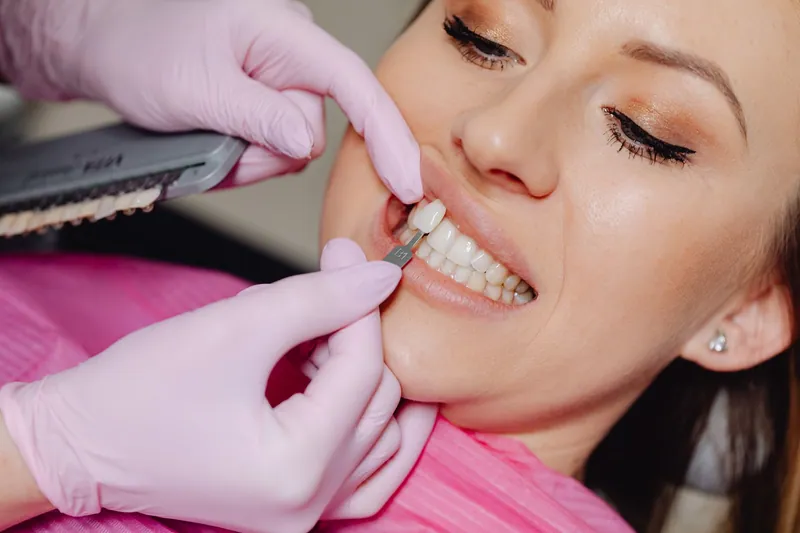
- Shade photos with a shade tab held in the same plane as the teeth
With these, we can see the smile line, the midline and how much tooth shows at rest. These details guide incisal edge position and length.
The diagnostic wax-up and mock-up
A diagnostic wax-up is our proposal for the final shape, length and proportion of the teeth. It turns the patient's goals into something everyone can look at and discuss.
From the wax-up, you can make an intraoral mock-up. This lets the patient see and feel the proposed changes before any preparation. It is also a chance to check phonetics, lip support and how the new edges look at rest and in a full smile. If something needs to change, now is the time, while it is still easy.
Provisionals as the blueprint
Once the patient approves the design, the provisionals become the blueprint for the final veneers. Patients live with them, talk with them and show them to family. They tell us more than any planning step before them.
When the patient is happy with the provisionals, send us:
- A scan or impression of the approved provisionals
- Notes on anything the patient wants changed from them
- Photos of the provisionals in the smile
We then use that approved shape as our guide, so the final veneers carry over what the patient already said yes to. This step is one of the most reliable ways to avoid surprises at delivery.
Communicating the preparation
Preparation design depends on the material, the planned changes and the treating dentist's judgment. Follow the material manufacturer's instructions for use for minimum thickness. What helps us most is clear communication:
- Clean, well-defined margins on the scan or impression
- A note on where the margins sit and any areas of limited space
- The stump shade of each prepared tooth, since it can influence the final color
If you prepared through a mock-up or used a reduction guide from the wax-up, let us know. It helps us understand the space available.
Shade and character
The final shade is more than a single tab number. We want to know about translucency at the incisal edge, any surface texture the patient likes, and whether they want subtle characterization or a cleaner look. For larger or high-esthetic cases, a custom shading consultation with Ron Salvatore, at our Revere lab or in your office, can make the difference between close and right.
Learn more about our porcelain veneers and e.max crowns.
Planning your next case
If you are planning a veneer case and want to talk through the steps, call us at 781.853.0777 or submit a case online.
Questions about a case?
Our technicians are glad to talk through materials, shade or design before you send it. Call 781.853.0777 or email ron@dentalcreations.net.
Send a case