
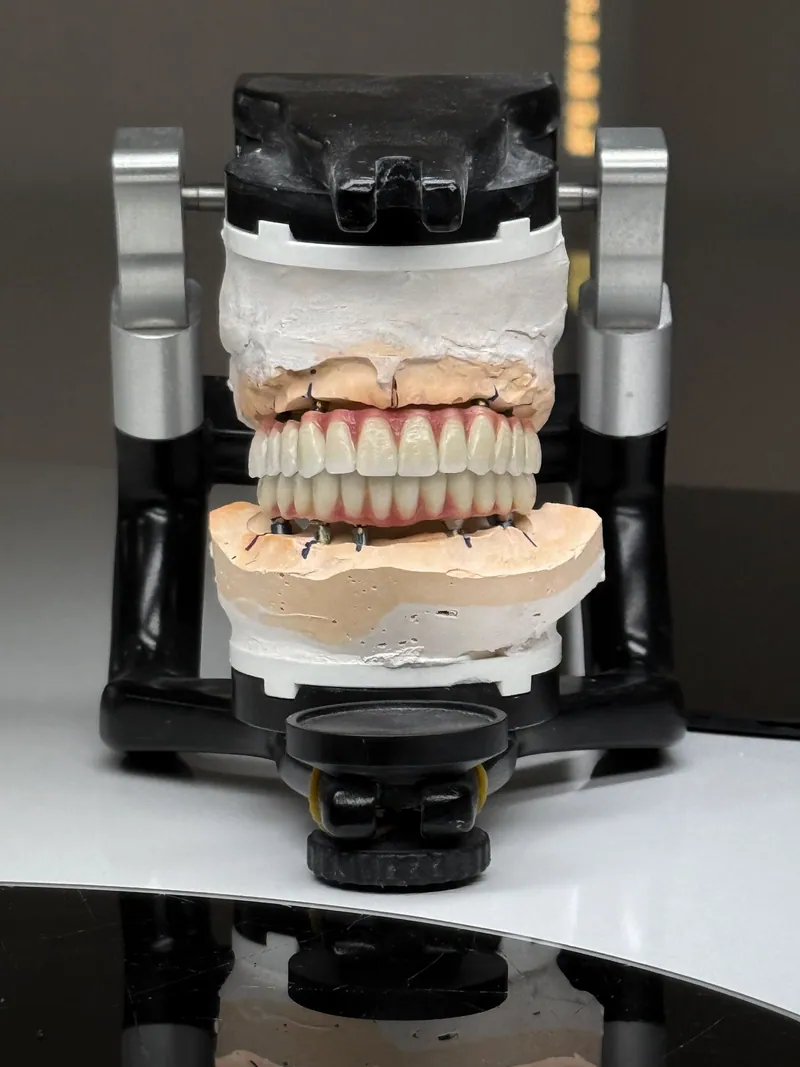
Two of the most common reasons a crown needs adjustment at delivery are contacts and occlusion. Neither is a fit problem in the usual sense. The crown seats, but the floss snaps or will not pass, or the patient feels it high. Much of this comes down to communication. When we know how you like contacts and occlusion set, we can build to that preference every time.
Why preferences differ
There is no single correct contact strength or occlusal setting. Dentists develop preferences based on their technique, their cementation approach and the patients they see. Some prefer to adjust a slightly heavy contact down. Others want the crown to seat with as little adjustment as possible. Both are reasonable. What helps us is knowing which you prefer.
Specifying contact strength
Contacts can be described in simple terms on the Rx:
- Light. Floss passes with light resistance. Useful when you prefer minimal adjustment and the crown seats passively.
- Standard or medium. Floss passes with a definite snap. A common default.
- Heavy. Firmer contacts that you plan to adjust chairside. Some dentists prefer this so they can fine tune at delivery.
A few other details help:
- Whether you want broad or point contacts
- Any adjacent restoration that might change how contacts feel
- Teeth that are mobile or recently moved, where contacts may need extra care
If a contact needs to be open, for example next to a tooth scheduled for treatment, note it clearly.
Specifying occlusion
For occlusion, these are the most useful notes:
- In occlusion, light, or out of occlusion. Tell us whether you want the crown in full contact, slightly light, or clear of the opposing teeth.
- Excursive contacts. Note whether you want the restoration to participate in guidance or be clear of contacts in lateral and protrusive movements.
- Parafunction. Let us know about bruxism or heavy wear. It may influence how we shape anatomy and which material you choose.
- Anatomy. Mention if you prefer shallow or more defined cusps and grooves.
These preferences only work if the bite record is accurate. Our post on bite registration tips for crowns covers how to get a reliable record.
Implant crowns and occlusion
Implants do not have the periodontal ligament that lets natural teeth move slightly under load. For that reason, many clinicians ask for implant crowns to be set lighter than adjacent teeth or kept out of certain contacts, especially in excursions. The right approach depends on the case, the implant and your clinical judgment, so please state your preference on each implant Rx rather than leaving it to a default. Learn more about our implant restorations.
Why consistent preferences save chair time
When your preferences are the same from case to case, we can build them into how we handle your work. Our technicians learn how you like contacts and occlusion set, and your restorations arrive closer to ready. That means:
- Shorter delivery appointments
- Less adjusting of glazed or polished surfaces
- Fewer surprises for you and your patients
If your preferences change for a specific case, a note on that Rx overrides the default. We will follow the case note.
Make it part of the Rx
Our prescription form includes fields for contacts and occlusion. If you send digital cases, include the same notes with the scan. For zirconia posterior work, where adjustments take more effort, clear preferences are especially helpful. Learn more about our zirconia crowns and bridges.
Every case is personally inspected before it leaves the lab, and we check contacts and occlusion against your stated preferences on the models or in the design.
Set your preferences with us
To set default contact and occlusion preferences for your office, call us at 781.853.0777 or submit a case online.
Questions about a case?
Our technicians are glad to talk through materials, shade or design before you send it. Call 781.853.0777 or email ron@dentalcreations.net.
Send a case