
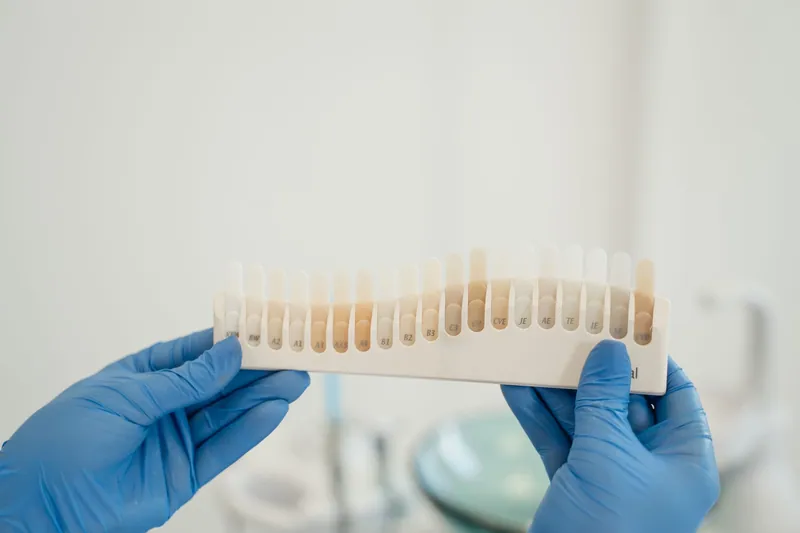
When a crown comes back looking a little gray or a little too warm, the target shade is usually not the problem. More often, the color underneath the restoration is. The prepared tooth, the core or the abutment all show through translucent ceramics to some degree, and we can only plan for what we know about.
What stump shade is
Stump shade is the color of the prepared tooth or core after reduction. It is different from the target shade, which describes how the finished restoration should look. For a translucent material, the final appearance is a blend of the two. Light passes into the ceramic, reaches the substrate and reflects back, carrying some of that underlying color with it.
That is why two crowns made to the same target shade can look different in the mouth. If one sits on a light, healthy dentin preparation and the other sits on a darkened tooth, the second will read lower in value unless the lab compensates.
Why it matters most with translucent materials
The more translucent the material, the more the stump influences the result. Lithium disilicate is prized for the way it handles light, and that same quality makes it sensitive to what lies beneath. Highly translucent zirconia behaves in a similar way. More opaque materials and layered restorations with an opaque core mask the substrate more effectively.
We cover the broader material choice in zirconia vs. e.max crowns. Stump shade is one of the factors that can tip that decision.
When to pay close attention
Stump shade is worth recording on every case, but it becomes critical in a few situations:
- Discolored teeth. Endodontically treated teeth, tetracycline staining or old amalgam staining can leave a dark preparation.
- Metal posts and cores. A cast post or a metal core can show through a translucent crown as a gray cast, especially near the gingival third.
- Composite or resin cores. Core materials vary in color and opacity, and they rarely match surrounding dentin exactly.
- Implants. A titanium abutment behaves very differently from a natural stump. Zirconia or custom abutments change the picture again. Let us know what the restoration will sit on so we can plan the material and opacity.
- Mixed substrates. A single preparation with natural dentin on one side and core material on the other needs extra attention.
How we compensate at the bench
Once we know the stump shade, we have several options. We can adjust the opacity of the ingot or blank, use a more opaque material, add masking layers, or recommend a different material altogether. The goal is to bring the final value and chroma back to the target. Without the stump shade, we are guessing, and guessing is where most shade remakes begin.
How to record and send it
Recording stump shade takes a minute and saves a lot of back and forth.
- Take the stump shade after preparation, before the tooth dries out. Dehydrated teeth read lighter than they are.
- Use a stump shade guide if you have one. If not, describe it in plain terms, such as "dark, gray, endo treated" or "metal post visible."
- Photograph the preparation with a shade tab held in the same plane as the tooth.
- Note the core material and any posts on the prescription.
- For implants, list the abutment material and type.
Write both the target shade and the stump shade in their own fields on the lab prescription form. If you send digital scans, attach the photos with the case. Our guide to sending digital scans to a dental lab covers what to include.
When a shade consultation makes sense
For high-visibility anterior work on a dark or mixed substrate, a custom shading consultation can be the most reliable path. Ron Salvatore can see the patient at our Revere lab or in your office, and that firsthand look at the stump and the adjacent teeth often answers questions a photo cannot.
Talk to us before you prep
If you have a challenging stump on the schedule, call us at 781.853.0777 to plan the case, or submit a case online when you are ready.
Questions about a case?
Our technicians are glad to talk through materials, shade or design before you send it. Call 781.853.0777 or email ron@dentalcreations.net.
Send a case